About The Dictionary Project

About Us

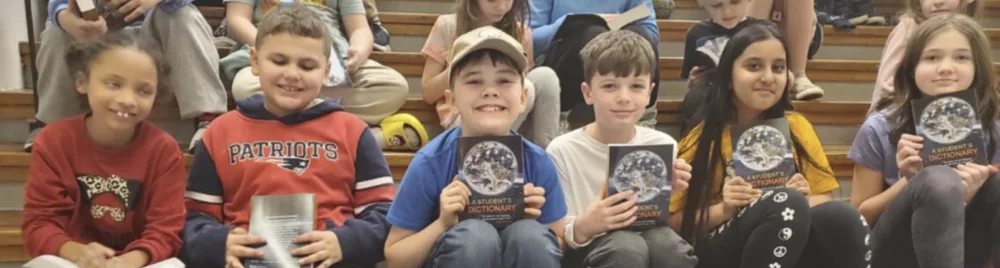
The Dictionary Project is a nonprofit organization dedicated to promoting literacy and educational opportunity by providing students with their own personal dictionaries. For more than three decades, sponsors, volunteers, schools, businesses, civic organizations, and community groups have worked together to place dictionaries into the hands of students, encouraging reading, writing, critical thinking, and lifelong learning.

What began as a simple act of generosity has grown into a nationwide effort that has helped millions of students receive one of the most valuable educational tools they will ever own—a dictionary they can use at school, at home, and throughout their lives.
 

The mission of The Dictionary Project is to ensure that everyone can experience the benefits of owning a dictionary. Our program assists people in becoming good writers, active readers, creative thinkers, and resourceful learners by providing them with their own personal dictionary. A dictionary is an essential tool for a quality education, and we believe every student should have the opportunity to own one.

The dictionaries are given as gifts for students to use both at school and at home for years to come. Educators recognize third grade as an important milestone because it represents the transition from learning to read to reading to learn. For that reason, many Dictionary Projects focus on providing dictionaries to third-grade students, although local sponsors may also support other grade levels and educational programs based on the needs of their communities.

Mary French's vision for The Dictionary Project was inspired by the work of Annie Plummer and Bonnie Beeferman, whose idea of providing dictionaries directly to students demonstrated the lasting impact a single book could have on a child's education. The goal was not simply to distribute dictionaries, but to help students become stronger readers, writers, thinkers, and lifelong learners.

We envision a future where each generation of dictionary recipients understands the importance of language and passes that appreciation on to the next generation. Language gives people the ability to communicate ideas, ask thoughtful questions, understand different perspectives, and participate more fully in their schools, communities, and society.

We believe that words empower people. A strong vocabulary helps individuals express themselves with confidence, think critically, solve problems independently, and make informed decisions. As technology continues to change the way we learn, a personal dictionary remains a valuable educational resource that encourages curiosity, exploration, and self-reliance rather than simply providing quick answers. Mary French also emphasized that learning is an active experience involving observation, questioning, and exposure to different points of view, and that command of language remains essential in an increasingly technology-driven world.

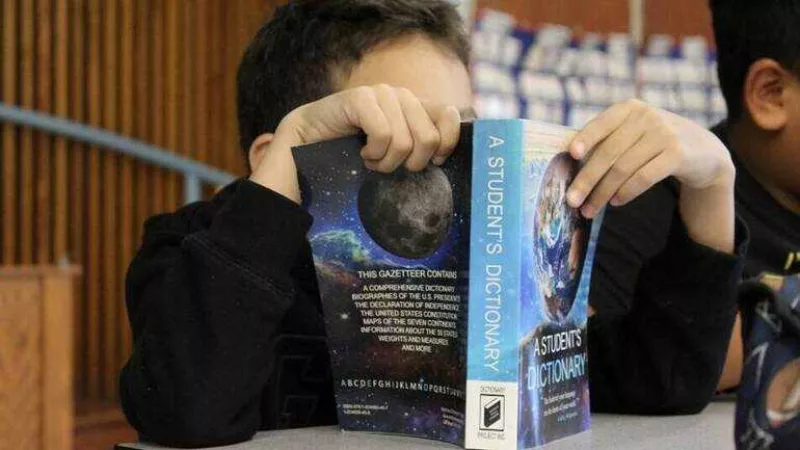
A simple gift became a national movement.

The Dictionary Project began with a simple idea: every child should own a dictionary.

Annie Plummer begins in Savannah

In 1992, Annie Plummer of Savannah, Georgia, began giving dictionaries to children attending a nearby school. What started as a small local effort quickly became a lifelong commitment. Through years of fundraising and community support, Annie ultimately provided more than 17,000 dictionaries to children in Savannah, demonstrating how one person's idea could make a lasting difference.

Bonnie Beeferman carries the idea forward

Annie's work inspired Bonnie Beeferman of Hilton Head, South Carolina, who launched a similar effort by raising money through community craft sales to provide dictionaries to local students. As demand from schools continued to grow, Bonnie realized the project had the potential to reach far beyond a single community.

Mary French answers the call

In 1995, Bonnie wrote a letter to the editor of the Charleston Post and Courier seeking help in expanding the project. Among those who read the article was Mary French, an active school volunteer. Recognizing the tremendous educational value of the idea, Mary began organizing Dictionary Projects throughout the Charleston area.

The Dictionary Project is established

As interest continued to grow, Mary and her husband, Arno French, established The Dictionary Project as a 501(c)(3) nonprofit organization, creating a national framework that would allow communities everywhere to launch their own Dictionary Projects.

Every South Carolina third grader is reached

The organization's first major goal was to provide dictionaries to every third-grade student in South Carolina. That milestone was achieved in 1999.

The project reaches a national audience

Three years later, in 2002, a front-page feature in The Wall Street Journal introduced The Dictionary Project to a national audience, inspiring individuals, businesses, civic organizations, and schools across the country to begin sponsoring projects in their own communities.

Local sponsors continue the mission

Today, The Dictionary Project continues to operate through local sponsors who believe in the power of literacy. Rotary Clubs, Kiwanis Clubs, Lions Clubs, schools, businesses, churches, foundations, and countless volunteers have introduced Dictionary Projects in communities throughout the United States and beyond. Sponsors may choose from dictionaries, thesauruses, bilingual dictionaries, atlases, and other educational reference books, ensuring that each project reflects the needs of its local students.

Mary French

Executive Director

Mary French has served as Director of The Dictionary Project since 1995 and has played a major role in expanding the organization’s literacy mission nationwide.

She has written and published multiple student dictionary editions and educational reference materials used by sponsors and schools throughout the program.

Contact: mary.french@dictionaryproject.org

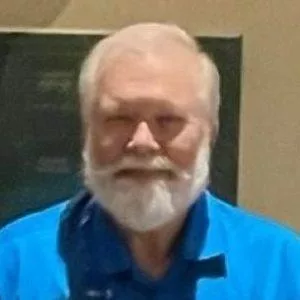
Dennis Brovarone

Board President

Dennis Brovarone joined The Dictionary Project’s Board of Directors in 2019 and currently serves as its President. He is an attorney and lives in Littleton, Colorado. He chairs the Littleton Rotary Literacy Committee and has been distributing dictionaries for over five years.

Dennis says the word that best describes him is persistent.

According to Dennis, “A dictionary is the gateway to not merely literacy but also science and the arts. Dictionaries are an educational necessity as that gateway tool and superior to reliance on websites and e-readers in many ways. Dictionaries become tactile treasures and a foundation of life long learning. Our literacy program in support of Littleton Public Schools is over twenty years old. Once a week for an hour or two, our volunteers have students read a book of their choice, one on one to a volunteer who helps with pronunciation, meaning, and just having an adult pay attention to them. These volunteer hours are usually the best part of the week and Dictionary Distribution Day is a high point of the school year for the students and the volunteers. I have had parents tell me they still have their dictionaries decades after finishing school while electronic devices become obsolete in a few years. The third and fourth graders are thrilled when our Rotary Club distributes the dictionaries and their teachers are grateful for the support.”

Contact: dbrovarone@gmail.com

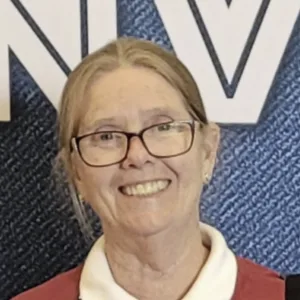
Heather Ranck

Vice President of the Board

Heather Ranck has been a logophile since childhood, when she twice competed in the National Spelling Bee. She expanded her love of English to learning foreign languages, and is fluent in Portuguese, Spanish and French, with some proficiency in Lingala and Russian. Heather is the Director of the U.S. Department of Commerce's Rural Export Center, a national research center based in Fargo, North Dakota, that provides market intelligence to rural American exporters. Ranck has lived and worked abroad in Brazil, the Democratic Republic of the Congo, Mozambique, Ukraine and Kazakhstan. She grew up on a dairy farm in Lancaster County, Pennsylvania. Ranck met her husband Ryan distributing dictionaries for Rotary Clubs in Fargo. Their children have never missed a dictionary packing party! Heather loves the power of a dictionary to spark curiosity and allow for precise meaning in expression, given each word's fascinating origin story. 

Contact: haranck@gmail.com

Gary Pollmiller

Secretary of the Board

Gary Pollmiller was elected to the Board of Directors in 2018 and currently serves as its Secretary. He lives in Parsons, Kansas and is a retired commercial fine art and product photographer.

Gary has been an active Rotarian since May 1, 1988. He has participated in The Dictionary Project since 2001 and says the word that best describes himself is "practical."

"A paperback dictionary is a practical, non-electronic method of improving the literacy of children and adults. I am not convinced that all students have access to a device or internet access in their home. These modern paperback dictionaries are practical when a student is given an assignment to learn about a new subject, and then can look up the words describing that subject which may seem outside of their present grade level." - Gary Pollmiller

Contact: gary_pollmiller@sbcglobal.net

Terry LaCombe-Stevens

Treasurer

Terry Lacombe-Stevens is the former Lieutenant Governor for the New England & Bermuda District of Kiwanis. She is passionate about childhood literacy, and currently serves as the Treasurer of the Board at the Dictionary Project.

"A dictionary is a vital resource because it provides students with the pride of ownership over a tool containing a wealth of information. Using a physical dictionary teaches essential skills such as alphabetizing and sequencing; furthermore, the process of searching for a specific word allows children to discover other valuable vocabulary they might miss when using a computer. Children truly enjoy receiving them, and the process of discovery makes learning both fun and engaging. I encourage everyone to utilize this important tool for education and to use it as a necessary break from digital screens." - Terry Lacombe-Stevens

Contact: terryllacombe@gmail.com

Dr. Betty Lou Richardson

Board Member

Dr. Betty Lou Richardson is an Advanced Practice Nurse and Licensed Marriage and Family Therapist with a distinguished career spanning more than six decades in mental health, nursing education, and community service. She holds a Ph.D. in Psychiatric Mental Health Nursing from the University of Texas at Austin and master’s degrees in both Nursing and Health Care Administration.

Dr. Richardson has served as Director of Nursing at Austin State Hospital, Professor of Nursing at Austin Community College, and a private practice therapist since 1988. She has authored and edited numerous textbooks and professional publications and continues to write a monthly parenting column for Austin Family Magazine.

A dedicated Rotarian, Dr. Richardson has led and supported humanitarian and health projects throughout Mexico and Central America, helping to establish clinics, improve schools, and expand access to care. Her many honors include Rotary International’s “Service Above Self” Award and recognition for her lifelong contributions to nursing education and international service.

Dr. Richardson’s dedication to learning, literacy, and child development directly supports The Dictionary Project’s mission to empower students through words. Drawing on her background in education and community outreach, Dr. Richardson brings valuable insight and compassion to her role as a board member.

Contact: bkrich5207@gmail.com

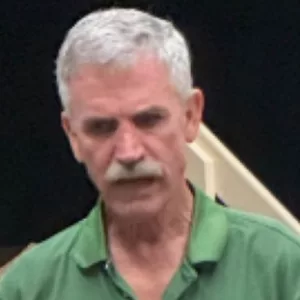
Steve Githens

Board Member

Steven Githens is a former Peace Corps volunteer with many years in government service. He has been working at a State Farm Insurance agency since 2007 and currently serves as a member of the Board.

"My experience with the benefit that the students derive from the dictionaries comes from making hundreds of presentations in local schools.  I make sure that the students understand each of the sections of the dictionary by telling stories and asking questions.  By the end of each presentation it's not at all unusual for students to walk out of the room hugging their new treasures.  After all, this is a book that invites the students to learn by sparking their curiosity about what else there is to learn.  

"In the thank you notes we receive, students point out everything they like about the book, whether it's learning about our Presidents, the solar system, the sign language alphabet or the challenge of looking up new words.  Their curiosity is on full display—and I love it." - Steven Githens


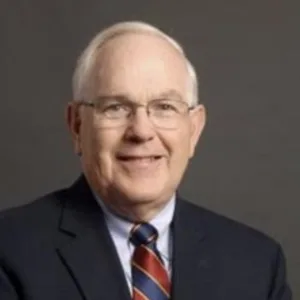
Bill Bassett

If his life were a dictionary entry, it might define a "multi-faceted educator and servant leader." After earning a BS in Mathematics from LeMoyne College (1966), an MS in School Administration from SUNY Brockport, and an EdD from Indiana University, Bill Bassett served as a US Navy Air Control Officer aboard the USS Wasp CVS-18 from 1968 to 1971. His professional career spans three years as an elementary teacher, three as a principal, 24 as a school superintendent, and a final role as District Superintendent and CEO of Orange Ulster BOCES in New York State. He also served as an Assistant Professor of Education at Mount Saint Mary College for seven years and as a Consultant for ECG Engineering for eight. Beyond his career, his community legacy is equally rich, including the Wallkill East Rotary, 16 years on the Orange Regional Medical Center Board, the United Way, the Chamber of Commerce, and Saint Paul's RC Church. A widower after 58 devoted years with his wife Susan, he is also a proud father to three married children and grandfather to three even more wonderful grandchildren.

Contact: wbassett@hvc.rr.com

Lion Steven Wasserman

Board Member

Steve was employed as a teacher at the Minnesota State Academy for the Blind for 32 years, where he taught science, math, computer science, humanities and French. He retired in 2008, but continues to do freelance work as a programmer of software that enables blind people to read what is on a computer screen. Steve joined the Faribault Lions Club in 1996, and served his club as president and long-time secretary. He has played a major role in his club conducting the Dictionary Project since 2003. Each year, the club provides approximately 400 dictionaries to third graders in Faribault and neighboring towns. Steve served as District Technology Chair, and Multiple District Technology Operations Consultant. He also served as District Governor in 2026-2017. He has been a strong supporter of people who are blind or visually impaired, providing braille and large print materials for the US/Canada Lions Leadership Forum, District and Multiple District Conventions, and for any Lion who has a need and makes a request. 

Contact: LionSteve@charter.net